
 Free Confidential Consultation. Call Now! 410-299-4959
Maryland Estate Planning: Necessity of Having a Will
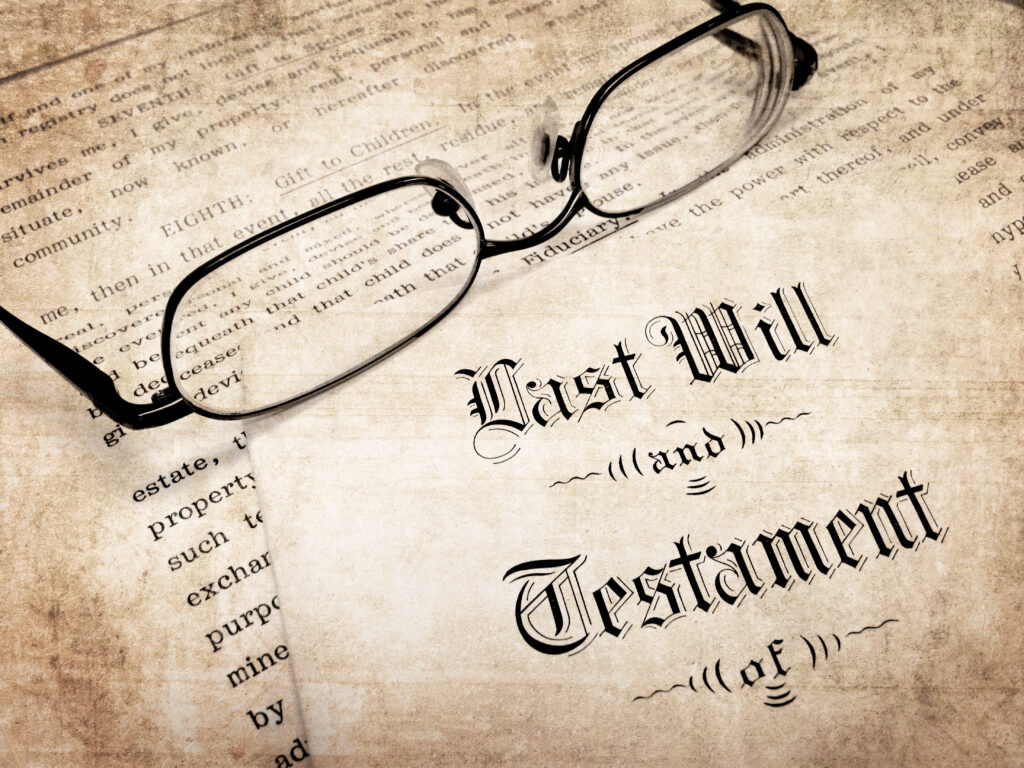
Without a Will, the State of Maryland, through its intestacy laws, determines the beneficiaries of the estate and what amounts they receive. This rarely aligns with what one actually wants. Maryland law in this regard is designed to be most “equitable” for the greatest number of its citizens and does not consider the particular needs, objectives, and wishes of a particular individual.
Creating a Will provides individual preference for the distribution of the estate assets including specific bequests to individuals, companies, or charities. It also allows for the protection and care of minor children. Without estate planning and a Will, or a Trust, Maryland law determines when and how a child will receive assets which could leave one’s children with unfettered and unsupervised control over assets at a young age and all under one final distribution.
Creating a Will in Maryland allows for the opportunity to use Testamentary Trusts for individuals such as a spouse or children. With proper estate planning, the use of Trusts can have important tax and asset management advantages.
Having a Will is even more critical for individuals with minor children. In the absence of a Will that appoints a guardian for the children, guardianship is determined through judicial proceedings. In this instance, a Maryland court could select a guardian whom the parent(s) would not have selected. It is through a Will that a parent appoints guardians for their minor children.
In the absence of a Will, Maryland law establishes the priority for appointment of a personal representative, which may not satisfy one’s wishes. Under Maryland law, a surviving spouse and children are given the same priority in serving as a personal representative. By creating a Will, the individual may designate a personal representative which will have precedence over Maryland law. The individual may also name alternate personal representatives of their own choosing. In the absence of a Will, any court appointed personal representative must post bond, the cost of which will be determined by the value of the estate, and this cost will become an expense of the estate, thus reducing assets distributed to beneficiaries. By creating a Will, the individual may elect to save this expense and have their personal representative serve without a bond.
If an individual dies without a Will, this could produce an untimely forced sale of the individual’s business, resulting in family hardship and financial loss. By creating a Will, an individual may provide for the continuance, or a well-designed sale, of the business.
A Will or a Trust, along with proper estate planning, can minimize or eliminate taxes paid to the Federal Government and the State of Maryland. No such opportunities exist without proper estate planning. With an estate plan the individual can also decide how any potential taxes will be paid.
A Will is necessary even when an individual has other forms of testamentary dispositions–such as Trusts–and has jointly held property. Even with the existence of a Trust, there are often assets that are not held in Trust. Additionally, some assets obtained after the creation of a Trust may not automatically become part of the Trust and thus could be part of the probate estate. When property is jointly held and the first spouse dies, the survivor would need a Will and estate plan. There is also the need for a Will in the event of simultaneous death of those holding joint interest in property. It is also unlikely that two individuals would hold joint ownership in all of their assets. Having joint ownership of all assets may fail to take advantage of tax benefits available under a well-designed estate plan.
For a free, confidential conversation to discuss the benefits of a Will, and estate planning, contact Maryland Estate Planning attorney Stephen J. Reichert at 410-299-4959, sreichert@reichertlegal.com or here.
- Posted by
 reichertlegal
- Posted in Estate Planning Baltimore County, Estate Planning Baltimore Maryland, Estate Planning Bethesda Maryland, Estate Planning Columbia Maryland, Estate Planning Howard County, Estate Planning Maryland, Wills & Trusts Baltimore Maryland, Wills & Trusts Bethesda Maryland, Wills & Trusts Maryland
 May, 10, 2013
 Comments Off on Maryland Estate Planning: Necessity of Having a Will
 Join Us On Facebook
 Join Us On Twitter
 Join Us On In.com
 Subscribe to RSS
 Follow Us On Google+
 Subscribe Us On Youtube
 Follow Us On Pinterest
 Follow Us On Instagram
 Follow Us On Tumblr
 Subscribe Us On Flickr